Comparative Analysis of Diatom and Traditional Whitening Ingredients
Safety and Effectiveness: Diatom vs. Hydrogen Peroxide
Hydrogen peroxide (H₂O₂) is highly effective in whitening teeth, capable of breaking down surface stains and slightly penetrating enamel for deeper color correction. Studies show that whitening toothpaste containing H₂O₂ improved teeth color in 75% of participants over 21 days. However, H₂O₂ poses significant safety risks: even 5% concentration caused 59% of users to experience tooth sensitivity, while higher concentrations may erode enamel and irritate gums.
In contrast, diatomaceous earth is a natural mineral with excellent safety. FDA-recognized as GRAS (Generally Recognized as Safe), diatom-based toothpaste removes stains via physical abrasion and adsorption, without chemical reactions. It is suitable for sensitive groups, including children, pregnant women, and the elderly, and avoids enamel damage or sensitivity.
Adsorption and Abrasion: Diatom vs. Activated Charcoal
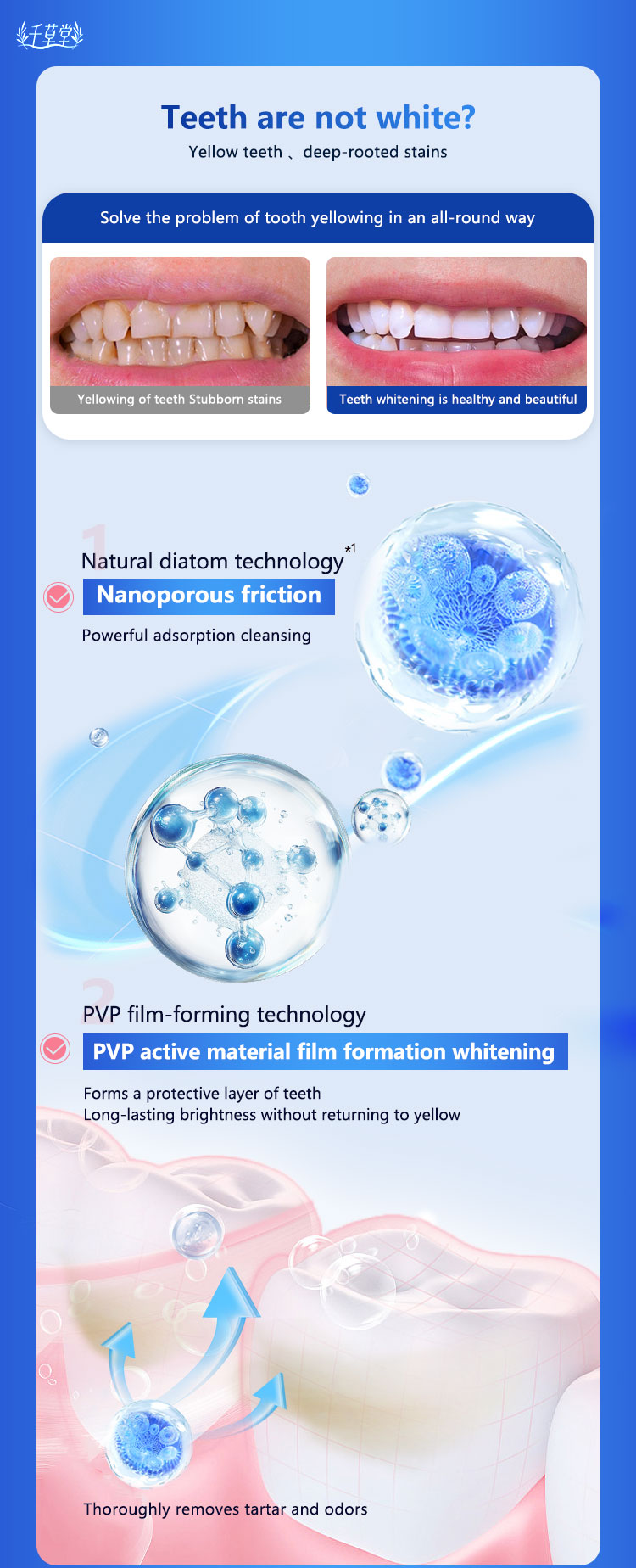
Activated charcoal relies on strong adsorption but may damage enamel due to abrasive particles. Clinical studies indicate limited whitening benefit and potential surface roughening. Diatom, however, combines adsorption with gentle, uniform, rounded particles, effectively removing stains and odors while protecting enamel. Additionally, it offers mild antibacterial effects for improved oral health.
Repair and Whitening: Diatom vs. Hydroxyapatite
Hydroxyapatite (HAp) repairs micro-defects in enamel and restores smoothness but provides limited whitening for deep stains. Combining diatom with HAp delivers a synergistic effect: diatom softens and adsorbs surface pigments, while HAp repairs enamel, achieving up to 92% stain removal on coffee and nicotine residues. This combination balances cost and performance: diatom costs $300–795/ton, while HAp is ~400 RMB/kg.
Cost-Effectiveness and Overall Performance
| Whitening Ingredient | Cost | Key Advantages | Key Limitations |
|---|---|---|---|
| Diatom | $300–795/ton | Natural, safe, strong adsorption, affordable | Whitening is gradual |
| Hydrogen Peroxide | Low | Strong whitening, low cost | Safety concerns, sensitivity, enamel erosion |
| Activated Charcoal | Moderate (~$10–30/kg) | High adsorption | Enamel damage, limited whitening |
| Hydroxyapatite | ~400 RMB/kg | Enamel repair, biocompatible | High cost, limited whitening |
Overall Assessment:
Diatom excels in safety, cost-effectiveness, and long-term usability. While its whitening effect is gentler than H₂O₂, it provides gradual, natural, and lasting results, with additional deodorizing and antibacterial benefits. Compared to activated charcoal, it avoids enamel damage and staining issues. When combined with hydroxyapatite, diatom achieves both whitening and enamel repair efficiently.
Conclusion:
Diatom-based toothpaste, especially Chicaotang diatom formulations, offers a superior balance of safety, effectiveness, and cost-efficiency. Its gentle yet durable whitening, enamel-friendly nature, and added oral health benefits make it a compelling alternative to conventional chemical or abrasive whitening ingredients.